Soil preparation across Fort Worth demands matching machine impact energy to specific subgrade composition. In areas like Fairmount Historic District and Ryan Place, expansive black clay shifts significantly with…
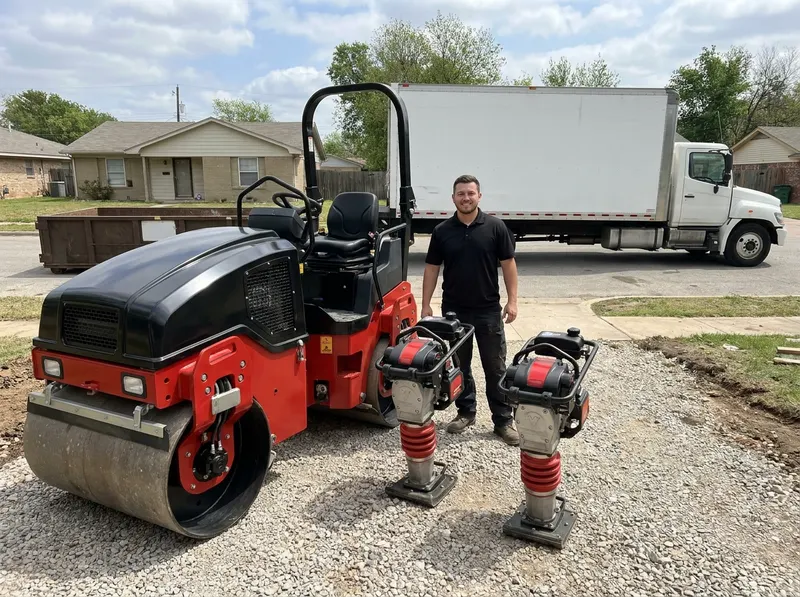
Soil preparation across Fort Worth demands matching machine impact energy to specific subgrade composition. In areas like Fairmount Historic District and Ryan Place, expansive black clay shifts significantly with seasonal moisture swings, requiring targeted rammer impact to consolidate deep utility trenches without leaving bridging voids. A jumping jack rammer delivers high per-blow force across a compact 11-by-13-inch shoe, making it the correct choice for narrow footer trenches and cohesive backfill lifts around foundation piers near TCU-Westcliff. Conversely, a smooth-drum vibratory roller or wide-plate compactor spreads uniform downward vibration across broad aggregate bases, which is the proper approach when prepping base stone for new parking aprons in Clearfork or extended flatwork subgrades near Alliance.
Selecting the right machine prevents structural settling beneath future concrete pours. Vibratory plate units fit granular aggregate such as crushed limestone or sand subgrades because rapid vibration shakes particles into dense interlock. If granular material is tackled with a heavy percussion rammer, the concentrated striking force often pulverizes aggregate stones rather than consolidating them into a solid base. When smoothing driveway base stone in Arlington Heights or compacting commercial paths near the Cultural District, smooth-drum compaction rollers deliver consistent pounds-per-linear-inch ratings, whereas rammers excel strictly within confined perimeter forms or around vertical pipes.
The trade-off between equipment classes comes down to lift depth versus lateral coverage speed. A walk-behind rammer processes deep 6-inch to 12-inch lifts of structural fill inside restrictive boundaries, but covering a 1,000-square-foot driveway footprint with a foot-sized shoe consumes excessive labor hours. A walk-behind or ride-on vibratory roller handles expansive surfaces rapidly, though the operator must limit backfill depth to thin 2-inch to 4-inch passes to achieve required structural density through the full soil column. Operating near Stockyards or Tanglewood job sites requires matching transport gate width and curb-drop clearances to prevent machine mobilization delays.
Every job gets a firm, written price after a free on-site visit.
Tell us about your compaction rollers & rammers job in Fort Worth and we'll send a clear, written quote, usually the same day.
 Sunset Ridge Dumpster Rental