Excavation work throughout Fort Worth requires careful matching of safety systems to local ground conditions. In areas with dense, shifting Eagle Ford clay like Tanglewood, Ryan Place, and Fairmount Historic District,…
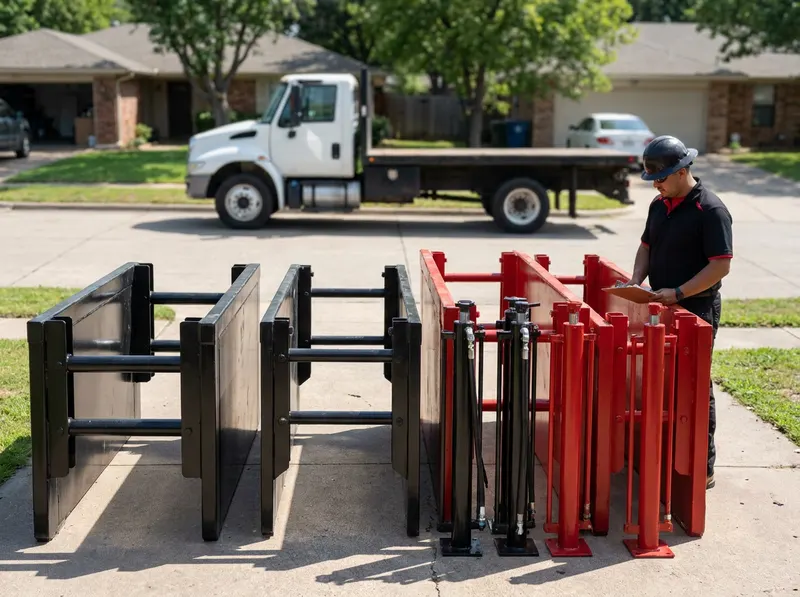
Excavation work throughout Fort Worth requires careful matching of safety systems to local ground conditions. In areas with dense, shifting Eagle Ford clay like Tanglewood, Ryan Place, and Fairmount Historic District, trench walls become dangerously unstable quickly after moisture exposure or sudden rain. OSHA standard 29 CFR 1926 Subpart P mandates protective systems for trenches 5 feet deep or greater, though loose granular backfill near older utility connections in Arlington Heights and the Cultural District often requires cave-in protection at shallower depths. Trench shoring prevents collapse by applying continuous outward hydraulic pressure against soil walls, whereas trench shields or boxes simply protect workers inside the frame if a collapse occurs. Selecting an ultra-light modular aluminum shield fits tight residential driveway cuts where a 5-ton mini-excavator handles the lifting, but deep commercial utility cuts near Alliance or along Clearfork require heavy steel double-wall shields that demand a 20-ton excavator to drag along the run.
Delivery logistics require planned site access, especially on narrow historic residential streets. 1. Pre-plan the equipment staging zone: narrow roadways like those in Fairmount Historic District or older blocks near TCU-Westcliff often require temporary city street-use permits if staging on the pavement, whereas open acreage projects in the Stockyards district allow straightforward off-street flatbed staging. 2. Verify lifting capacities: unassisted drop-off is not possible because heavy steel trench boxes weigh between 2,500 and 12,000 pounds, meaning a properly rated machine must be on-site to sling and lift the components from the delivery deck. 3. Finalize assembly before setting: modular aluminum systems assemble on the surface in 15 to 30 minutes with drop pins, eliminating the need for down-hole assembly. The crucial trade-off involves transport weight versus protection depth; lightweight aluminum shores reduce street-pavement stress and work with compact utility excavators, but they carry lower maximum depth ratings than heavy-gauge welded steel boxes.
Every job gets a firm, written price after a free on-site visit.
Tell us about your trench safety & shoring systems job in Fort Worth and we'll send a clear, written quote, usually the same day.
 Sunset Ridge Dumpster Rental