Selecting the right air delivery comes down to tool air volume requirements. A portable 185 CFM diesel unit supplies enough steady air volume to run two 60-pound jackhammers or a continuous residential media blaster…
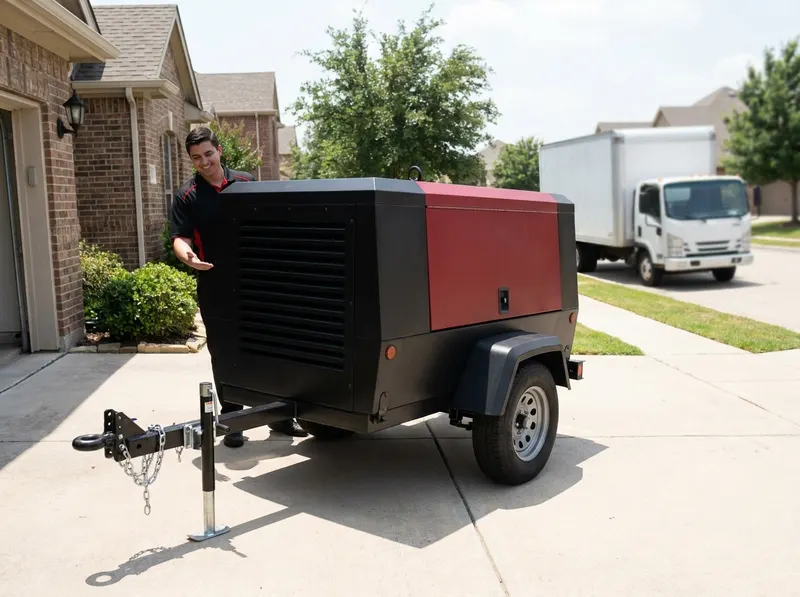
Selecting the right air delivery comes down to tool air volume requirements. A portable 185 CFM diesel unit supplies enough steady air volume to run two 60-pound jackhammers or a continuous residential media blaster during paint stripping on a historic home in the Fairmount Historic District or Ryan Place. If a commercial utility crew near the Stockyards or Alliance runs deep trench tamping or heavy foundation breaking, stepping up to a 375 CFM unit supplies the necessary flow rate to prevent line-pressure drops. The trade-off between standard portable units and towable rigs centers on mobility versus volume: small electric plug-in compressors fit inside tight residential hallways but stall on continuous high-draw tools, whereas towable diesel units remain outside in driveways or curb lanes, requiring longer 3/4-inch whip lines to transfer power without losing line pressure.
Operating heavy mechanical equipment in dense Tarrant County corridors requires strict attention to site limits. Narrow, tree-lined residential streets along Arlington Heights and TCU-Westcliff present tight backing angles; trailer units require a clear 10-foot staging lane and stable, level ground to prevent automatic oil-pressure cutoffs during multi-hour engine runs. When performing restoration work near sensitive civic areas like the Cultural District, Dickies Arena, or the Fort Worth Botanic Garden, modern sound-attenuated enclosures keep running noise down to 76 dBA at 23 feet, allowing work to proceed within standard municipal daytime sound limits without disturbing neighbors.
Setup is direct: 1. Position the tow rig on level pavement or firm soil, lower the tongue jack, and set heavy wheel chocks. 2. Verify all discharge valves are closed, check engine oil and diesel fuel levels, then start the diesel engine on low idle to bring operating temperature to 180 degrees Fahrenheit. 3. Couple your 3/4-inch heavy-duty rubber bull hoses using safety whip-checks and locking pins at every claw connection. 4. Open the service air valve to pressurize your tooling circuit to a steady 100 PSI working pressure.
Every job gets a firm, written price after a free on-site visit.
Tell us about your towable air compressors job in Fort Worth and we'll send a clear, written quote, usually the same day.
 Sunset Ridge Dumpster Rental